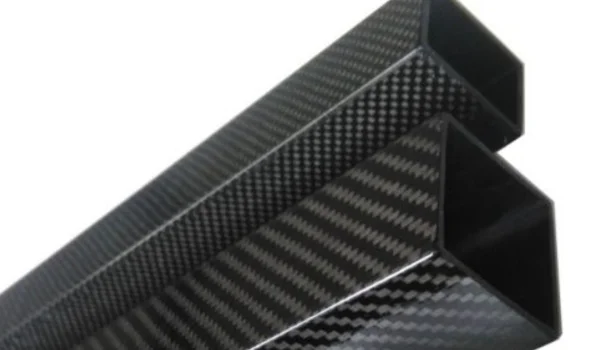
Carbon fiber rectangular tubes are essential components in modern engineering—used in aerospace, automotive, robotics, sporting goods, industrial automation, and construction. Their strength-to-weight ratio, corrosion resistance, and dimensional stability make them popular among U.S. manufacturers and engineers.
If you’re planning to manufacture carbon fiber rectangular tubes or want to understand the end-to-end process, this guide explains everything in a simple, practical, and professional way.
What Are Carbon Fiber Rectangular Tubes?
Carbon fiber rectangular tubes are hollow structural profiles with rectangular cross-sections, manufactured using layers of carbon fiber fabric or unidirectional (UD) tapes combined with epoxy resin. They offer:
- High tensile strength
- High stiffness in bending
- Lightweight design
- Low thermal expansion
- Corrosion & fatigue resistance
- Superior dimensional accuracy
Because of these properties, they are used in drones, CNC machines, camera rigs, construction beams, automation frames, and more.
Manufacturing Methods for Carbon Fiber Rectangular Tubes
There are five primary manufacturing processes used in the USA:
- Pultrusion (Most Common Industrial Method)
How Pultrusion Works
- Continuous carbon fiber roving and fabrics are pulled through a resin bath.
- Impregnated fibers enter a heated steel die shaped like a rectangular tube.
- Resin cures under heat and pressure.
- A continuous tube exits the machine and is cut to length.
Advantages
- Consistent quality
- High volume production
- Excellent mechanical properties
- Cost-efficient for long tubes
Disadvantages
- Limited to constant cross-sections
- Less suitable for custom shapes
Best For: Industrial supply, robotics frames, construction profiles.
- Roll-Wrapping
Process
- Carbon fiber prepreg sheets are wrapped around a rectangular mandrel.
- Layers are compacted using heat-shrink tape or vacuum bagging.
- The wrapped mandrel is cured in an oven or autoclave.
- The mandrel is removed after curing.
Advantages
- Great control over fiber orientation
- High stiffness
- Suitable for medium-scale production
Disadvantages
- More labor-intensive
- Slightly higher cost
Best For: Performance tubes, drones, sports equipment.
- Resin Transfer Molding (RTM)
Process
- Dry carbon fiber fabric is placed inside a closed mold.
- Resin is injected under pressure.
- Mold is heated to cure the resin.
- Tube is demolded.
Advantages
- High precision and smooth surface finish
- Good for complex geometries
Disadvantages
- Higher tooling cost
- More suitable for high-volume production
Best For: Automotive and aerospace series manufacturing.
- Filament Winding (Limited Use for Rectangular Shapes)
Although traditionally used for cylindrical tubes, filament winding can be applied to rectangular shapes using custom mandrels.
Advantages
- Highly automated
- Excellent strength in specific load directions
Disadvantages
- Difficult corner definition
- Limited design flexibility
Best For: Specialized high-strength applications.
- Compression Molding (For Short Sections)
Process
- Prepreg layers are placed in a two-part rectangular mold.
- Mold closes under pressure and heat.
- Tube cures and is removed.
Advantages
- Strong, uniform parts
- Ideal for high-strength rectangular pieces
Disadvantages
- Not suitable for long tubes
- High tooling cost
Best For: Short, high-load structural components.
Material Selection Guide
- Carbon Fiber Types
- Standard Modulus (SM): General-purpose strength
- Intermediate Modulus (IM): Higher stiffness
- High Modulus (HM): Aerospace-grade stiffness
- Fabric Types
- Unidirectional (UD) tape: Best for bending stiffness
- Twill weave: Balanced strength and aesthetics
- Plain weave: High stability, good for flat surfaces
- Resin Systems
- Epoxy resin (most common)
- High-temperature resin for aerospace
- Toughened resin for automotive parts
Step-by-Step Manufacturing Process (Pultrusion Example)
Step 1: Fiber Preparation
- Select roving, mat, or UD tapes
- Set up creels for continuous feeding
Step 2: Resin Impregnation
- Fibers pass through epoxy or polyester resin bath
- Controlled viscosity ensures proper wet-out
Step 3: Preforming
- Fibers arranged into rectangular shape using guides
Step 4: Heated Die Curing
- Shape and cure happen simultaneously
- Typical temperature: 120–160°C
Step 5: Pulling Mechanism
- Caterpillar pullers maintain constant speed
- Ensures uniform wall thickness
Step 6: Cutting & Finishing
- Precision saw cutting
- Sanding, drilling, or CNC machining as needed
- Surface coating or clear resin polishing
Quality Control Checklist
USA manufacturers follow standards such as ASTM D3039, ASTM D7264, and ISO 527.
Key Tests
- Tensile strength test
- Flexural test
- Void content analysis
- Wall thickness measurement
- Resin-to-fiber ratio
Common Defects to Avoid
- Voids or air pockets
- Delamination
- Improper curing
- Fiber misalignment
- Surface wrinkles
Applications of Carbon Fiber Rectangular Tubes
Industrial Applications
- Machine frames
- Conveyor rollers
- CNC system arms
- Robotics & automation
Aerospace & Defense
- UAV arms
- Satellite structures
- Lightweight aircraft parts
Sports & Recreation
- Bicycle components
- Camera rigs
- Tripods
Construction
- Architectural beams
- Reinforcement structures
Cost Factors in Manufacturing
Cost depends on:
| Factor | Impact |
| Carbon fiber grade | Higher grade = higher cost |
| Resin type | Aerospace resins cost more |
| Manufacturing method | Pultrusion is cheapest |
| Tooling investment | RTM & compression molding are costly |
| Labor needs | Roll-wrapping is more labor-intensive |
Tips for New Manufacturers (USA Market)
- Start with pultrusion for large-volume rectangular tubes.
- Use prepreg roll-wrapping for high-performance, smaller tubes.
- Maintain consistent resin ratio (optimal 33–38% resin by weight).
- Invest in quality molds and dies for precise tolerances.
- Perform thermal cure profiling for uniform results.
Conclusion
Carbon fiber rectangular tubes are essential in multiple industries due to their strength, precision, and lightweight nature. Whether you’re building high-performance drone arms or industrial automation frames, choosing the right materials and manufacturing process is key.
This guide covered everything from manufacturing methods (pultrusion, roll-wrapping, RTM) to material selection, quality control, and applications—helping both beginners and professionals understand the complete process.
About the Author