Carbon fiber has transformed the global automotive industry. Once used only in aerospace and Formula 1, today carbon fiber components are widely used in sports cars, EVs, motorcycles, luxury sedans, and even performance aftermarket kits.
If you’re looking for the best carbon fiber car parts manufacturers, understanding the production methods, material quality, application areas, and top global suppliers will help you make the right choice. This guide explains everything in simple language.
What Are Carbon Fiber Car Parts?
Carbon fiber car parts are automotive components made from carbon fiber reinforced polymer (CFRP)—a composite material known for its exceptional:
- Strength-to-weight ratio
- Stiffness
- Heat resistance
- Aesthetic appeal (carbon weave finish)
- Durability and corrosion resistance
Common Carbon Fiber Car Components
- Hoods (bonnets)
- Spoilers & wings
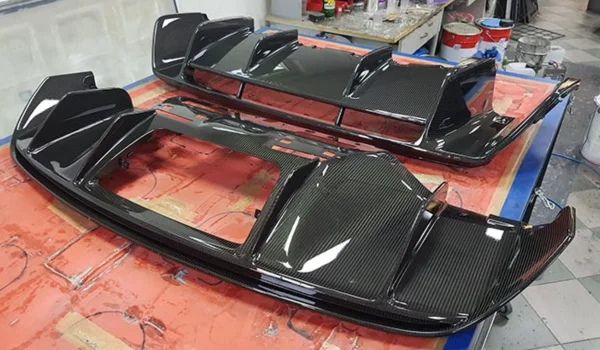
- Splitters & diffusers
- Fenders & side skirts
- Roof panels
- Mirror caps
- Trunk lids
- Dashboard trims
- Engine covers
- Steering wheels
- Structural reinforcements
- Driveshafts
High-end manufacturers also produce full carbon body shells for supercars.
Why Carbon Fiber Is Preferred in Automotive Manufacturing
✔ Lightweight (up to 60% lighter than steel)
Improves speed, fuel efficiency, and EV range.
✔ High Strength & Stiffness
Ideal for performance cars and racing applications.
✔ Superior Aesthetic Appeal
Twill weave and glossy carbon fiber finish are popular in aftermarket styling.
✔ Better Heat & Corrosion Resistance
Perfect for engine bay and underbody parts.
✔ Improved Handling & Aerodynamics
Carbon parts reduce weight at key points.
Carbon Fiber Car Parts Manufacturing Process
Manufacturers use different production methods depending on whether the parts are for OEM, motorsport, or aftermarket applications.
- Prepreg Layup (Premium Method – Automotive OEMs)
Process:
- Prepreg carbon sheets (resin pre-impregnated) are layered in molds
- Cured under pressure in an autoclave
- Produces aerospace-grade, lightweight parts
Applications:
- Supercars (Lamborghini, McLaren)
- Motorsports
- Structural components
- Vacuum Infusion (Cost-Effective & Strong)
Process:
- Dry carbon layers are placed in closed molds
- Resin is vacuum-infused
- Provides consistent quality
Applications:
- Hoods, fenders, bumpers, diffusers
- Compression Molding (High Volume Production)
Used for automotive OEM mass production.
Materials:
- SMC (Sheet Molding Compound)
- Forged carbon fiber
Applications:
- Interior trims
- Structural reinforcements
- EV body parts
- Filament Winding (Structural Tubular Parts)
Used for:
- Driveshafts
- Roll bars
- Tubular frame components
Types of Carbon Fiber Used in Cars
| Carbon Fiber Grade | Features | Applications |
| Standard Modulus (SM) | High strength | Body panels, interior |
| Intermediate Modulus (IM) | High stiffness | Suspension parts, aero |
| High Modulus (HM) | Extremely stiff | Motorsport, structural |
| Forged Carbon | Random chopped fibers | Luxury trims, cosmetic parts |
Top Carbon Fiber Car Parts Manufacturers (USA & Global)
Below is a curated list of leading companies known for their precision, quality, and advanced composite technology.
Top Carbon Fiber Car Parts Manufacturers – USA
- Anderson Composites (California)
- Specializes in full carbon body kits
- Popular in Mustang, Camaro, Dodge, Tesla aftermarket
- OEM-quality carbon parts
- APR Performance (California)
- Known for carbon aerodynamic parts
- Produces wind-tunnel-tested spoilers, splitters, and diffusers
- Seibon Carbon (USA)
- Offers high-quality wet carbon fiber parts
- Affordable and widely used in tuning communities
- CarbonByDesign (Pennsylvania)
- Premium carbon prepreg components
- Works with motorsport and aviation material
- Rock West Composites (USA)
- Supplies OEM & custom carbon car parts
- Offers engineering + fabrication services
Top Global Carbon Fiber Automotive Manufacturers (Japan, Germany, China, UK)
- Toray Industries (Japan)
- Largest producer of automotive-grade carbon fiber
- Supplies to Toyota, BMW, and aerospace brands
- SGL Carbon (Germany)
- Major OEM supplier
- Works with BMW (i-series carbon bodies)
- Teijin Automotive Technologies (Japan/USA)
- High-volume automotive composite producer
- Specializes in SMC and structural composites
- Carbotech (Austria)
- Expertise in motorsport components
- Lightweight racing parts for GT and F1
- Tameo Composites (Italy)
- Custom and luxury automotive composite parts
- Known for artisan carbon craftsmanship
- Tillett Racing Seats (UK)
- High-strength carbon racing seats
- Motorsport-focused manufacturing
- Chinese Manufacturers (Cost-Effective)
Popular for bulk aftermarket parts:
- Tstar Composites
- LHC Carbon
- Xinghui Auto Carbon Parts
These suppliers offer competitive pricing but quality varies—ideal for non-structural parts.
Industries & Vehicle Types That Use Carbon Fiber Parts
- Supercars & hypercars
- EVs (Tesla, Lucid, BYD, NIO)
- Performance sports cars
- Off-road & rally vehicles
- Custom tuning shops
- Motorsport (NASCAR, F1, GT3, WRC
How to Choose the Best Carbon Fiber Car Parts Manufacturer
Before ordering, consider:
✔ Manufacturing Method
Prepreg vs wet carbon vs forged carbon.
✔ Material Grade
Toray T700/T800 fibers are industry standards.
✔ Fitment Accuracy
Especially important for body kits.
✔ Finish Quality
Gloss, matte, UV coating, and weave alignment.
✔ Certifications
ISO 9001, automotive testing standards.
✔ Customization Options
3K, 12K, forged carbon, colors, honeycomb cores.
✔ Pricing & Lead Time
Carbon Fiber Car Parts: OEM vs Aftermarket Manufacturers
| Feature | OEM Manufacturer | Aftermarket Manufacturer |
| Quality | Highest | Varies |
| Fitment | Perfect | Sometimes needs adjustments |
| Cost | Expensive | Budget-friendly |
| Customization | Limited | Very flexible |
| Production Scale | Large | Small/medium |
Conclusion
Carbon fiber car parts are transforming the automotive world with their lightweight strength, aesthetics, and performance benefits. Whether you’re sourcing parts for OEM production, motorsport, or aftermarket customization, choosing the right manufacturer ensures durability, precision, and long-term reliability.
Industry leaders like Toray, SGL Carbon, Anderson Composites, APR Performance, and Seibon Carbon continue to innovate using advanced composites, helping the automotive sector move toward lighter, faster, and more efficient vehicles.
About the Author