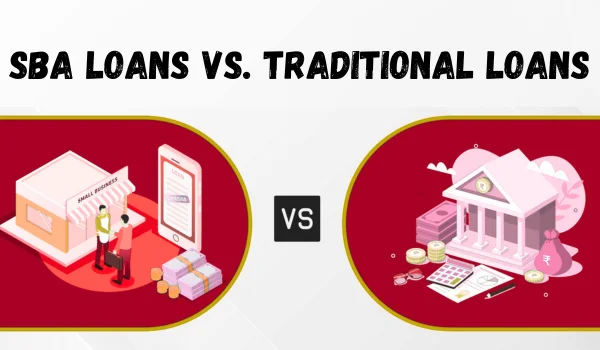
If you’re deciding how to finance your small business, you’ll quickly run into two big buckets: SBA-backed loans and traditional (non-SBA) bank/online loans. Both can work beautifully—if you understand how they differ on cost, speed, paperwork, and flexibility. This guide breaks it down in plain English, with a quick-scan comparison table, clear pros & cons, and when each option shines.
First, what are we comparing?
- SBA loans: Loans made by banks/credit unions/CDC nonprofits but partially guaranteed by the U.S. Small Business Administration (SBA). Main programs:
- 7(a) – the most common; broad uses like working capital, inventory, equipment, business acquisition. The SBA typically guarantees up to 85% on loans ≤ $150k and up to 75% above that; specialized export loans can be higher.
- 504 (CDC/504) – long-term, fixed-rate financing for major fixed assets (equipment, real estate) via Certified Development Companies (CDCs), typically paired with a bank first mortgage; max CDC portion generally up to $5.5M.
- Microloans – up to $50,000, delivered by nonprofit intermediaries; average loan ≈ $13k.
- Traditional loans: Standard bank/credit-union or online-lender products without an SBA guarantee—term loans, lines of credit, equipment financing, etc. Typical bank rates lately have started around the mid-6% to low-11% range for qualified borrowers, while online options vary much wider. (Rates vary by credit, revenue, collateral, and market conditions.)
Snapshot Comparison
| Feature | SBA 7(a) & 504 | Traditional Bank Loan | Online/Alt Lender (non-SBA) |
| Who lends? | Banks/credit unions + CDCs (504); SBA guarantees a portion | Banks/credit unions | Fintechs & online lenders |
| Typical use | 7(a): broad uses; 504: major fixed assets (equipment/real estate) | Broad uses | Working capital, inventory, quick cash needs |
| Guarantee | 7(a): up to 85% (≤$150k), 75% (> $150k); higher for some export loans | None | None |
| Amounts | SBA range: about $500 to $5.5M (program-dependent); Microloans to $50k | Widely varies by bank | Widely varies by platform |
| Rates | Competitive; 504 CDC piece is fixed-rate; lender portion negotiated within SBA caps | Often competitive for strong borrowers | Range widely; can be higher for speed/easier approval |
| Terms | 504: long terms (10–25 yrs) on fixed assets; 7(a): varies by use | Varies; often shorter than 504 | Often shorter (6–36 months common) |
| Speed | Moderate; SBA review adds steps | Moderate | Often fast (days) |
| Paperwork | Heavier (business plan, projections, SBA forms) | Moderate-heavy | Light-moderate |
| Eligibility | Must meet SBA size/other rules | Bank underwriting standards | Platform-specific underwriting |
Sources: SBA program pages and lender overviews.
Pros & Cons
SBA Loans
Pros
- Lower risk to lenders (SBA guarantee) can help approvals and terms.
- 504 loans offer long-term, fixed-rate financing—great for buying real estate or big equipment.
- Microloans help newer businesses or smaller capital needs.
Cons
- More paperwork & time (SBA forms, eligibility checks).
- Use-of-funds rules vary by program; not every purpose fits 504 or microloans.
- Policy/market shifts can impact processing and lender appetite.
Traditional Bank Loans (non-SBA)
Pros
- Streamlined compared with SBA; one set of bank docs/decisions.
- Potentially competitive rates for strong, established borrowers.
Cons
- Tougher approvals without an SBA guarantee—banks may demand longer time-in-business, stronger cash flow, and collateral.
- Terms can be shorter than 504 for fixed assets, affecting monthly payment size.
Online/Alternative Lenders
Pros
- Speed (application to funding can be fast).
- Flexible underwriting can help newer businesses or imperfect credit.
Cons
- Higher cost on average; wide APR ranges.
- Often shorter terms and frequent repayments, which can strain cash flow.
When does each option make sense?
- Choose SBA 7(a) if you need versatile funding (working capital, inventory, acquisition) and can handle extra paperwork for potentially better terms.
- Choose SBA 504 if you’re buying real estate or large equipment and want long, fixed terms to keep payments predictable.
- Choose Traditional Bank if your business is established, financials are strong, and you want a straightforward bank relationship and competitive pricing.
- Choose Online/Alt if speed is critical or you’re still building credit/history and accept a higher cost to seize a time-sensitive opportunity.
Eligibility & Documentation (What lenders actually look for)
Common across all options
- Time in business, revenue trends, debt service coverage, and personal/business credit.
- Financial statements, tax returns, bank statements, entity docs, and a clear use of funds.
SBA-specific
- SBA size standards/eligibility, SBA forms (e.g., for 7(a)), and program-fit (e.g., fixed assets for 504).
- SBA guarantee percentages and fee structures vary by program and fiscal year. (SBA publishes tools like the 7(a) guaranty fee calculator annually.)
Cost Reality Check (Rates & Terms)
- Banks (non-SBA): Recently, average business bank loan rates have started around ~6.6%–11% for strong borrowers, but your rate depends on credit, collateral, and the market.
- Online lenders: Very wide range; convenience and speed often mean higher APRs.
- 504: CDC portion is fixed-rate when the debenture is sold; paired with a bank first mortgage that can be fixed or variable.
Tip: Don’t chase the lowest headline rate—compare APR, fees, term length, amortization, prepayment rules, and collateral. Total cost and cash-flow fit matter more than a single number.
Quick Decision Flow (2-Minute Self-Test)
- Buying real estate or big equipment? → Look at 504 first.
- Need general working capital, inventory, or buying a business? → 7(a) or bank term loan/LOC.
- Newer business, limited collateral, need funding fast? → Online lender (know the trade-off on cost).
- Strong financials and multi-year track record? → Traditional bank may be simplest and competitive.
Example Use-Cases (Who wins?)
| Scenario | Best Fit | Why |
| Buy your first warehouse | SBA 504 | Long-term, fixed-rate structure for fixed assets. |
| Acquire a small competitor | SBA 7(a) | Flexible use for acquisitions + SBA guarantee can ease approval. |
| Seasonal inventory spike next month | Online lender or bank LOC | Speed and revolving access; compare cost carefully. |
| Established café adding a second location | Bank loan or 7(a) | Depends on strength; 7(a) can help if collateral is thin. |
FAQs
1) Are SBA loans always cheaper than traditional loans?
Not always—but the SBA guarantee can help you qualify and may improve terms. Final pricing depends on lender, program caps, your credit, collateral, and market rates.
2) What’s the main difference between 7(a) and 504?
7(a) is versatile (working capital, acquisition, equipment). 504 is purpose-built for major fixed assets with long, fixed terms via a CDC plus a bank.
3) How fast can I get funded?
Online lenders can be days; banks and SBA often take longer due to underwriting and SBA steps (especially 504 closings). Timing varies by lender and file readiness.
4) What sizes are we talking about?
SBA loans cover micro (to $50k) up to multi-million (504 CDC portion up to $5.5M, commonly paired with a bank). Banks/online lenders vary widely.
5) Do SBA loans require collateral or personal guarantees?
It depends on program and loan size; lenders follow SBA rules plus their own policies. Expect personal guarantees and collateral requirements, especially on larger loans.
Bottom Line
- Pick SBA when you need help qualifying, want longer terms (especially for real estate/equipment via 504), or prefer structured programs with an agency guarantee.
- Pick Traditional when you have strong financials, want a simple process, and can secure competitive rates directly with your bank.
- Use Online lending strategically for speed and flexibility, knowing the cost trade-off.
About the Author