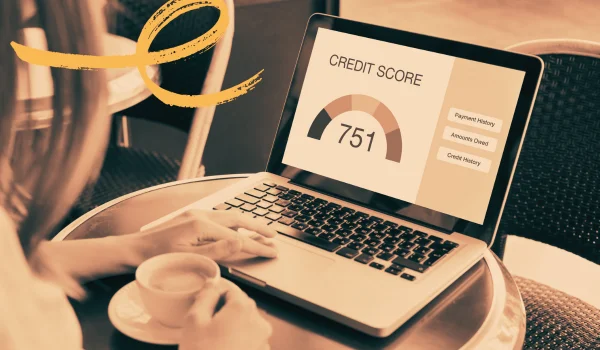
A business credit score is a numeric snapshot lenders, suppliers, and partners use to judge how likely your company is to pay its bills on time. Unlike personal credit, business credit focuses on your company’s financial behavior, public records, payment history, and corporate structure. Good business credit makes loans, vendor terms, and insurance easier and cheaper to get.
Why business credit matters
- Access to capital: Lenders use business scores to set interest rates, credit limits, and whether to lend at all.
- Better vendor terms: Suppliers may offer net-30/60 terms to companies with strong business credit, improving cash flow.
- Protects your personal credit: Strong business credit helps you avoid needing personal guarantees or personal cards for business needs.
Main business credit bureaus & scores
| Bureau / Score | Scale & What it measures | Who uses it |
| Dun & Bradstreet (PAYDEX) | 1–100; focuses on vendor payment history — 80+ = low risk. | Suppliers, many lenders, B2B partners. |
| Experian (Intelliscore Plus / Business Credit Score) | Typically 1–100 bands (A–G variants); predicts likelihood of delinquency. | Banks, lenders, insurers. |
| Equifax Business Risk Score | Generally 0–100 (higher = lower risk); models 24-month delinquency probability. | Creditors and risk teams. |
| Other aggregators (Nav, third-party services) | Combine bureau data or present scores in more familiar (300–850) ranges for clarity. | Small businesses and advisors for monitoring. |
Takeaway: There’s no single “business FICO.” Different lenders check different scores — so monitor multiple reports.
How business credit scores are calculated (main factors)
- Payment history (largest factor for many scores). Timely supplier and loan payments boost scores; late payments hurt.
- Public records & filings. Bankruptcies, tax liens, UCC filings, and judgments lower scores.
- Company size, age & industry risk. Older firms with stable revenue often score better; industry risk is baked into models.
- Credit utilization & outstanding balances. High balances or near-limit utilization can reduce your score.
- ** tradelines & depth of credit file.** A richer history of business credit accounts (trade lines) improves predictability.
What’s a “good” business credit score?
Scales differ, but common benchmarks:
- D&B PAYDEX: 80–100 = low risk (good).
- Experian: Scores in the top band (A or 76–100 depending on presentation) are considered low risk.
- Equifax: Higher scores (closer to 100) indicate lower default probability.
Because scores and ranges vary, focus on the relative band (low, moderate, high risk) and how lenders interpret that specific bureau’s score.
How to build and improve your business credit (actionable steps)
- Form a formal business entity (LLC, S-Corp) and get an EIN — separate your business identity from your personal one.
- Open a business bank account and use it for all business transactions.
- Register with Dun & Bradstreet (get a D-U-N-S® number) so you appear in D&B’s database.
- Establish trade credit: Work with suppliers who report payments to business credit bureaus — pay early or on time.
- Apply for a business credit card or small line of credit and keep utilization low.
- Monitor reports regularly (Experian, Equifax, D&B) and dispute any errors quickly.
- Limit personal guarantees when possible as your business profile strengthens — but expect to provide PGs early on.
Common mistakes that hurt business credit
- Mixing personal and business finances.
- Not registering your business with major bureaus (D&B D-U-N-S®).
- Missing supplier payments or ignoring small invoices (vendors reporting late payments damage PAYDEX most).
- Failing to monitor and dispute inaccurate public records or wrong entries.
Sample monitoring checklist (use monthly/quarterly)
- Pull D&B report (check PAYDEX and public records).
- Check Experian business credit file and band.
- Review Equifax business risk report for delinquency signals.
- Reconcile supplier invoices and ensure reporting vendors have correct payment records.
Quick comparison: Business vs Personal credit
| Item | Business Credit | Personal Credit |
| Primary purpose | Lender/vendor assessment of a company | Lender/issuer assessment of an individual |
| Score sources | D&B, Experian Business, Equifax Business, others | FICO, VantageScore (Experian/TransUnion/Equifax) |
| Public records impact | Business bankruptcies, liens, UCCs | Personal bankruptcies, judgments, tax liens |
| Separability | Can be separate from owner (with EIN & structure) | Always tied to individual |
Frequently Asked Questions
Q: Will checking my business credit hurt my score?
A: Soft checks for monitoring usually don’t affect scores. Hard credit inquiries from lenders can have an impact—ask the creditor which type they will use.
Q: If my business is new, how can I get credit?
A: Start with a business bank account, small business credit card, and supplier accounts that report payments. Consider secured cards or small lines that report to bureaus. Register for a D-U-N-S number.
Q: Do all suppliers report to business credit bureaus?
A: No. That’s why it’s important to work with reporting vendors or ask existing suppliers to report your on-time payments.
Q: How long for improvements to show?
A: Positive actions (on-time payments, lower balances) can reflect in a few billing cycles, but major score shifts may take several months. Removing negative public records (liens, judgments) can take longer.
Bottom line
Business credit scores are a powerful tool for growing companies. Treat your business’s credit profile like an asset: register properly, pay on time, build tradelines that report, and monitor reports from Dun & Bradstreet, Experian, and Equifax. Over time, a stronger business credit profile unlocks lower borrowing costs, better supplier terms, and greater independence from personal guarantees.
About the Author