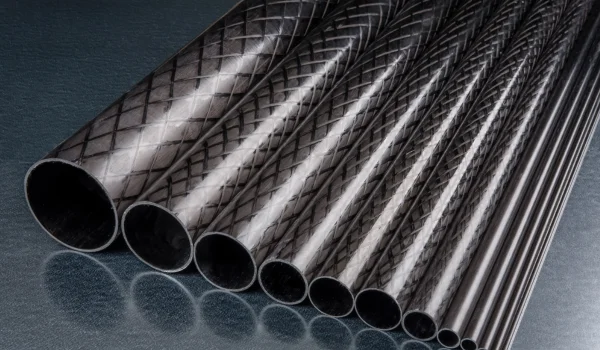
Carbon fiber tubes have become essential components in industries that demand high strength, lightweight structure, corrosion resistance, and precision performance. From aerospace and automotive to sports equipment, robotics, and industrial automation—carbon fiber tubes offer unmatched mechanical properties.
If you are searching for the best carbon fiber tube manufacturers, understanding the production process, materials, and key suppliers is crucial. This comprehensive guide covers everything you need in simple, clear language.
What Are Carbon Fiber Tubes?
Carbon fiber tubes are hollow cylindrical or rectangular profiles made using carbon fiber reinforcement combined with epoxy resin or other high-performance polymers.
Key Advantages
- Extremely high strength-to-weight ratio
- Corrosion resistant
- Electrically conductive
- Vibration dampening
- High stiffness (modulus)
- Long-life performance
These benefits make them an ideal replacement for traditional materials like steel, aluminum, and fiberglass.
How Carbon Fiber Tubes Are Manufactured
Carbon fiber tubes are made using one of three main processes. Each method affects the final strength, weight, and price.
- Roll-Wrapping (Most Common & High-Quality)
Process:
- Prepreg carbon fiber sheets (pre-impregnated with resin) are wrapped around a mandrel
- Layers may be unidirectional, woven, or a custom layup
- Wrapped mandrel is cured in an oven or autoclave
- Mandrel is removed, leaving a strong, lightweight tube
Benefits:
- Excellent appearance
- High bending and torsional strength
- Ideal for UAV frames, camera equipment, aerospace parts
- Pultrusion (For Long, Consistent Tubes)
Process:
- Continuous carbon fiber tows are pulled through a resin bath
- Fibers are shaped into tube form through a heated die
- Allows mass production of long, straight tubes
Benefits:
- Very cost-effective
- Perfect for construction, supports, rods, and beams
- Highest axial strength (along length)
- Filament Winding (Best for Pressure-Resistant Tubes)
Process:
- Continuous carbon fibers are wound at precise angles over a rotating mandrel
- Ideal for creating pressure-tolerant cylindrical structures
- Used in aerospace, industrial cylinders, medical parts
Benefits:
- Extremely high hoop strength
- Excellent for tubes requiring maximum durability
Types of Carbon Fiber Tubes
Manufacturers produce various shapes and grades to match industry needs.
By Shape
- Round tubes
- Square/rectangular tubes
- Oval tubes
- Hexagonal tubes
- Custom profiles
By Structure
- Unidirectional tubes (maximum stiffness in one direction)
- Woven tubes (balanced strength)
- Hybrid tubes (carbon + Kevlar or glass fiber)
Surface Finish
- Glossy, matte, twill weave, plain weave
- UV-resistant coatings
Key Features Customers Look for in a Carbon Fiber Tube Manufacturer
To choose the right supplier, consider:
✔ Material Quality
- Aerospace-grade prepregs
- High-quality resin systems (epoxy, BMI, PEKK, etc.)
✔ Manufacturing Capabilities
- Autoclave curing
- CNC machining & cutting
- Custom layup design
- Large-scale production capacity
✔ Certifications
- ISO 9001
- AS9100 (aerospace)
- ROHS & REACH compliance
✔ Customization
Most buyers need custom:
- Diameters
- Wall thickness
- Layups
- Lengths
- Finishing
✔ Testing & Quality Control
High-end manufacturers offer:
- Ultrasonic inspection
- Fiber volume fraction testing
- Tensile & compression strength tests
Top Carbon Fiber Tube Manufacturers (USA & Global)
Below is a curated list of reputable companies known for producing high-quality carbon fiber tubes.
- Rock West Composites (USA)
Location: Utah, California
Specializes in:
- Roll-wrapped and pultruded tubes
- Aerospace and industrial carbon composites
- Custom prototyping and CNC machining
- Clearwater Composites (USA)
- Expert in high-performance composite tubes
- Strong focus on aerospace-grade quality
- Provides custom designs and prototyping
- DragonPlate (Allred & Associates, USA)
- Popular for robotics, drones, and hobby applications
- Offers modular tube and connector systems
- ACP Composites (USA)
- Known for precision tubing and aerospace components
- Supplies tubes for industrial and medical applications
- SGL Carbon (Germany / Global)
- Produces industrial and aerospace-grade components
- Large international footprint
- Supplies major automotive companies
- Toray Carbon Magic (Japan)
- High-precision carbon tubing
- Famous for motorsport and aerospace parts
- Uses premium Toray fibers
- Tstar Composites (China)
- Strong in roll-wrapping and filament winding
- Cost-effective for bulk orders
- Popular among global importers
Industries That Use Carbon Fiber Tubes
Carbon fiber tubes are used in:
- Aerospace structures
- Automotive performance parts
- Industrial automation
- Robotics and drones
- Camera rigs and stabilizers
- Marine equipment
- Medical devices
- Sports equipment (bikes, arrows, paddles)
- Defense and security
Their combination of low weight, high stiffness, and corrosion resistance makes them ideal for extreme performance environments.
How to Choose the Best Carbon Fiber Tube Manufacturer
Consider these points before finalizing a supplier:
- Manufacturing Method
Roll-wrapped vs pultruded vs filament winding.
- Material Grade
Standard modulus, intermediate modulus, or high modulus carbon fiber.
- Size & Customization Options
Supports special diameter, wall thickness, tolerance, and finishing.
- Production Volume
Small prototype batches vs mass production.
- Pricing Transparency
Clear quotes, no hidden machining or custom layup fees.
- Lead Time & Logistics Support
Important for international buyers.
Conclusion
Carbon fiber tubes have become an essential material across modern industries due to their lightweight strength, durability, and precision performance. Whether you’re sourcing for aerospace, robotics, automotive, or industrial applications, partnering with the right carbon fiber tube manufacturer ensures reliability, quality, and long-term results.
Top suppliers like Rock West Composites, DragonPlate, Clearwater Composites, and SGL Carbon lead the market with advanced manufacturing capabilities and strict quality control.
Understanding the different production methods, material grades, and selection criteria will help you choose the best manufacturer tailored to your needs.
About the Author